SAE J3253: Insulation Monitoring for ePTO Systems | Bender
The electrification of commercial vehicles is changing more than just the drivetrain. Auxiliary equipment such as pumps, refrigeration systems, compressors, hydraulic systems, and other body-mounted machinery can now be powered directly from the vehicle’s high-voltage system through an electric Power Take-Off (ePTO).
SAE J3253, issued in August 2025, provides a recommended interface for transferring high-voltage DC power between a commercial vehicle chassis and electrically powered body or accessory equipment. The recommended practice covers ePTO applications above 60 VDC and typical EV voltage ranges up to 1,500 VDC.
Extending the High-Voltage System
Once ePTO equipment is connected, it effectively becomes part of the vehicle’s high-voltage electrical system. Additional cables, connectors, converters, motors, and other equipment also create additional locations where insulation deterioration can occur.
SAE J3253 addresses this concern in several ways. It identifies monitoring and detection of loss of isolation as an important consideration, establishes insulation resistance (R_iso) as a key parameter between chassis and body equipment, and references SAE J1766 and ISO 6469-3 for high-voltage electrical safety.
ISO 6469-3 specifies minimum isolation resistance relative to operating voltage—typically 100 Ω/V for DC high-voltage systems. For example, an 800 VDC system corresponds to a minimum isolation resistance of 80 kΩ.
The Role of an Insulation Monitoring Device
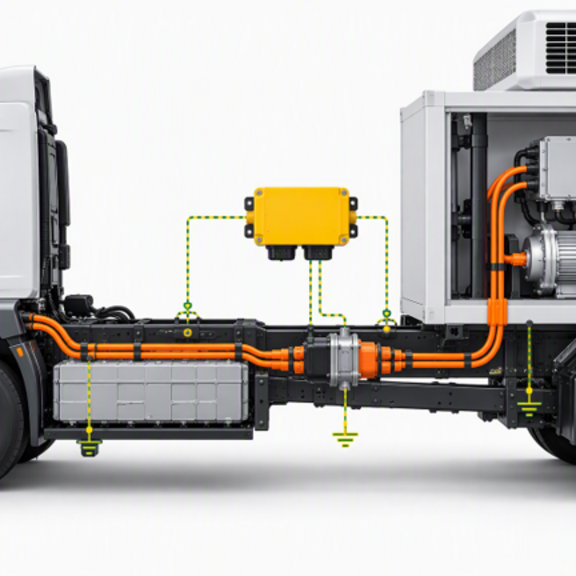
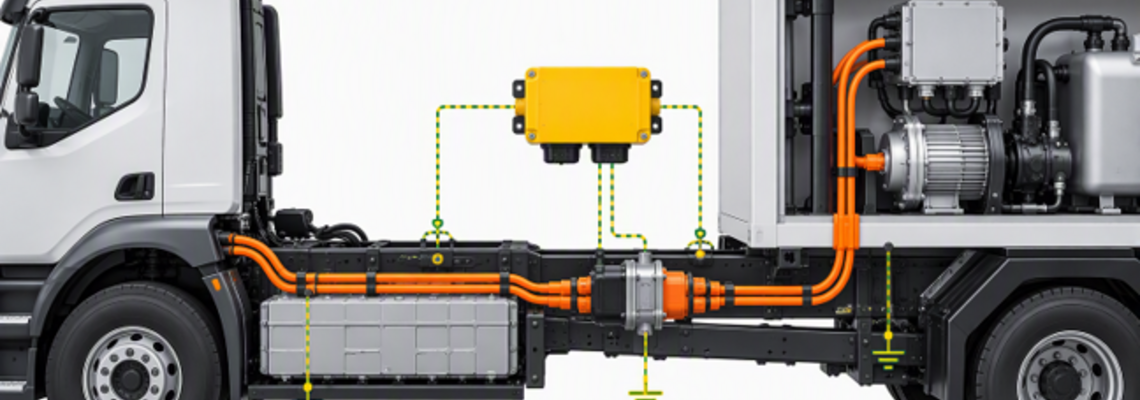
An Insulation Monitoring Device (IMD) continuously monitors the resistance between active high-voltage conductors and the vehicle chassis. In an ePTO application, this allows the complete connected system—including the vehicle HV bus, ePTO cable, body equipment, converters, and electric motors—to be monitored.
If insulation resistance deteriorates, the IMD can provide information to the vehicle or body controller so that appropriate action can be taken, such as issuing a warning, preventing ePTO activation, opening a contactor, or initiating a controlled shutdown.

Bender Technology for High-Voltage ePTO Systems
Bender has decades of experience in insulation monitoring technology for ungrounded electrical systems, including high-voltage DC applications.
Bender automotive insulation monitoring devices can continuously monitor the insulation resistance between the HV system and vehicle chassis. This makes the technology well suited for ePTO architectures where connecting external equipment expands the vehicle’s original high-voltage network.
Depending on the system architecture, Bender IMD technology can support monitoring of the complete connected HV network and provide insulation-resistance information to the vehicle or equipment controller. This information can be incorporated into the system safety strategy to provide early warning of insulation deterioration or initiate appropriate control actions.
As commercial vehicles continue to electrify not only propulsion but also auxiliary equipment, insulation monitoring provides an important tool for maintaining visibility into the electrical condition of an increasingly complex high-voltage system.
Explore Related Solutions
- ISOMETER® iso175 | Insulation monitoring for ungrounded high-voltage systems in electric and hybrid vehicles, including ePTO applications.
- eMobility Ground-Fault Monitoring for Ungrounded Systems | View Bender insulation monitoring products for electric vehicles and DC charging applications.
Bender insulation monitoring technology helps make a insulation problem visible, before it becomes a critical fault.
Ready to improve electrical safety in your ePTO application?
Bender has helped customers improve electrical safety, system availability, and operational reliability for more than 80 years. Contact the Bender team to discuss the right insulation monitoring solution for your high-voltage system.

