Electric Aircraft Safety Does Not Stop on the Ground
Electric aircraft commonly use an ungrounded, or floating, high-voltage DC system, where neither battery pole is intentionally connected to the conductive airframe. One important advantage is that a first insulation fault does not normally create the large fault current associated with a grounded system. While the aircraft may remain operational, the fault must be detected before a second fault occurs.
Onboard Insulation Monitoring
During operation, an onboard Insulation Monitoring Device (IMD) continuously monitors the insulation resistance between the high-voltage system and the aircraft structure.
Modern aircraft present a challenging electrical environment with inverters, propulsion motors, converters, EMC filters and Y-capacitors. Bender's active measurement technology is designed to monitor insulation resistance throughout these complex AC/DC networks while accounting for capacitive influences.
DC Charging Directly into the Battery
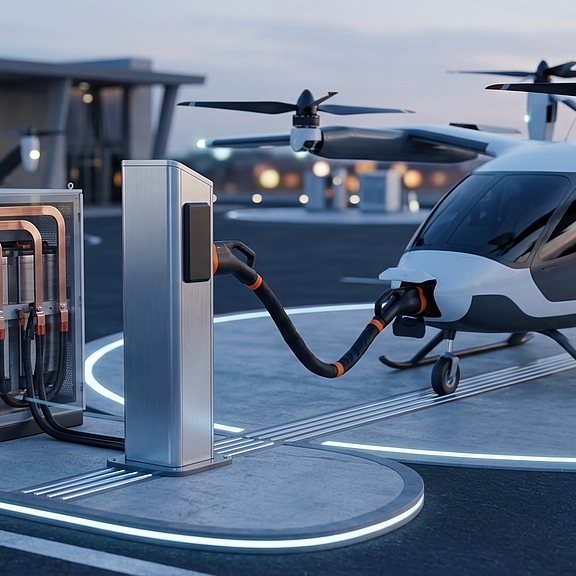
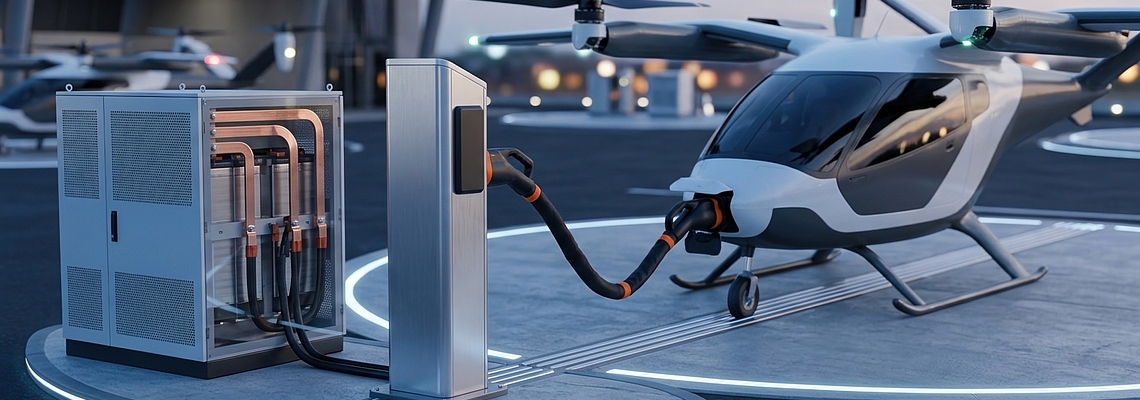
When the aircraft lands, high-power DC charging can be supplied directly to the aircraft's high-voltage battery, eliminating the need for a large onboard AC/DC charger.
Now, the charger and aircraft battery become conductively connected. The charging equipment must therefore monitor the insulation condition of the DC charging circuit. Insulation monitoring is already an established safety principle in DC fast charging, with standards such as UL 2231 and IEC 61851-23 addressing insulation monitoring and fault response.
This creates an important design consideration: the aircraft has an onboard IMD, while the DC charger may have its own IMD. During charging, these two active monitoring systems must be properly coordinated to prevent interference and ensure reliable insulation measurement.
Bender Technology Means Insulation Monitoring from Charging to Flight
Bender insulation monitoring technology can provide protection on both sides: onboard the aircraft during operation and within the ground-based DC charging system while energy is transferred directly into the battery.
From charging to flight, the objective remains the same: detect deterioration of the high-voltage insulation before a first fault can develop into a potentially hazardous second fault.
Explore Bender Solutions
Learn more about electrical safety for electric mobility, charging infrastructure, and ungrounded systems:
About Bender
Bender is a global leader in electrical safety. Our intelligent monitoring solutions help protect people, equipment, and critical systems while supporting reliable power availability across industries. From electric mobility and charging infrastructure to industrial systems, healthcare, data centers, and renewable energy, Bender helps customers identify electrical faults early and keep essential systems operating safely.
Ready to discuss your application? Contact Bender to connect with an electrical safety specialist.

