
A ground fault occurs when electrical current leaves its intended path and flows through an unintended connection to ground or grounded equipment. Common causes include damaged insulation, loose or damaged wiring, moisture intrusion, contamination, and equipment deterioration.
Depending on the system design and available fault current, a ground fault can cause an alarm, automatic shutdown, electric shock, equipment damage, arc-flash hazards, or fire. Facilities use ground-fault detection, ground-fault monitoring, and ground-fault location systems to identify these conditions and respond appropriately.
A ground fault involves current flowing from an energized conductor to ground or grounded equipment. A short circuit generally involves an unintended connection between energized conductors, such as line-to-line or line-to-neutral. Both conditions can produce dangerous current, but the appropriate detection and protection method depends on the fault path and electrical system design.
Ground-fault protection is intended to disconnect a circuit when fault current exceeds a specified threshold. Ground-fault monitoring continuously evaluates the electrical system and provides an alarm when a developing or active fault is detected.
Monitoring can give maintenance teams time to investigate insulation deterioration, leakage current, or other abnormal conditions before they cause an unexpected outage. The correct strategy depends on the system grounding method, available fault current, continuity requirements, protective-device coordination, and whether automatic shutdown is appropriate.
For additional application guidance, visit Customer Resources.
In a solidly grounded system, a ground fault can produce substantial current, allowing fuses, circuit breakers, or ground-fault protection devices to disconnect the affected circuit. Residual-current monitoring can provide earlier warning of leakage and developing insulation problems.
In an ungrounded system, the first ground fault may not produce enough current to operate conventional overcurrent protection. An insulation monitoring device continuously monitors the system’s insulation resistance to ground and provides an alarm when it falls below a specified level. Ground-fault location equipment can then identify the affected branch while the system remains energized.
In a high-resistance grounded system, a neutral grounding resistor limits ground-fault current. Monitoring equipment detects the fault and provides an alarm, allowing continued operation after the first fault when the system is designed and operated for that purpose.
Ground-fault detection, monitoring, and location systems are used wherever electrical safety, equipment protection, and continuity of service are important. Common applications include:
The appropriate strategy depends on whether the system is grounded, ungrounded, or resistance grounded, as well as its voltage, operating environment, and uptime requirements.
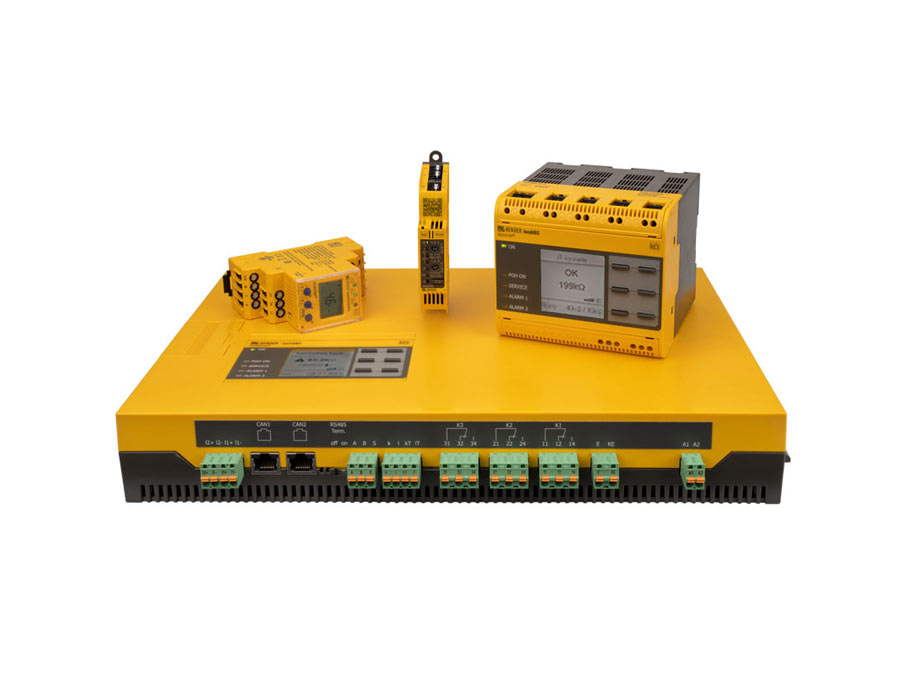
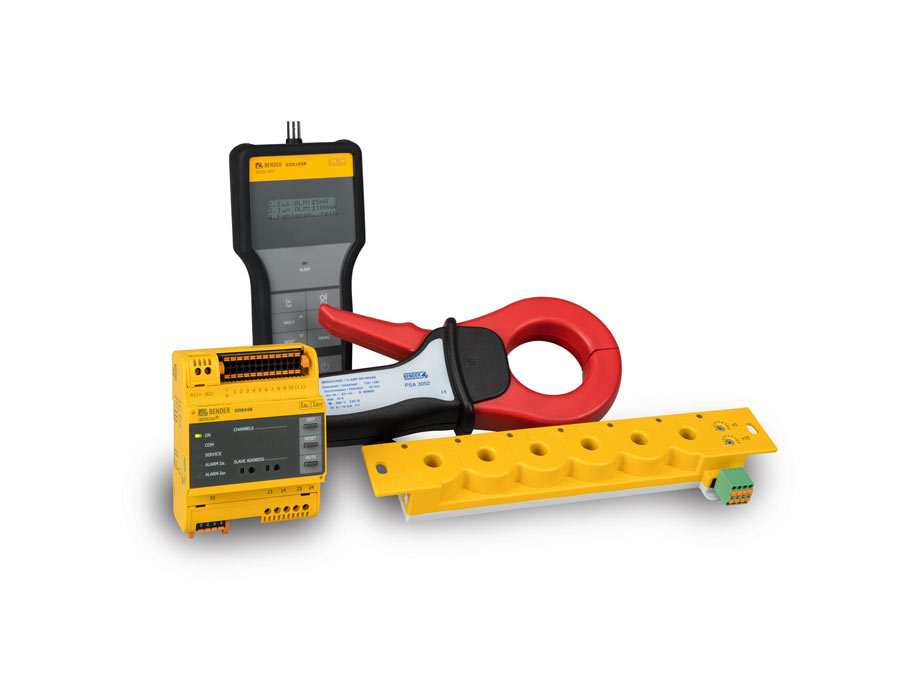
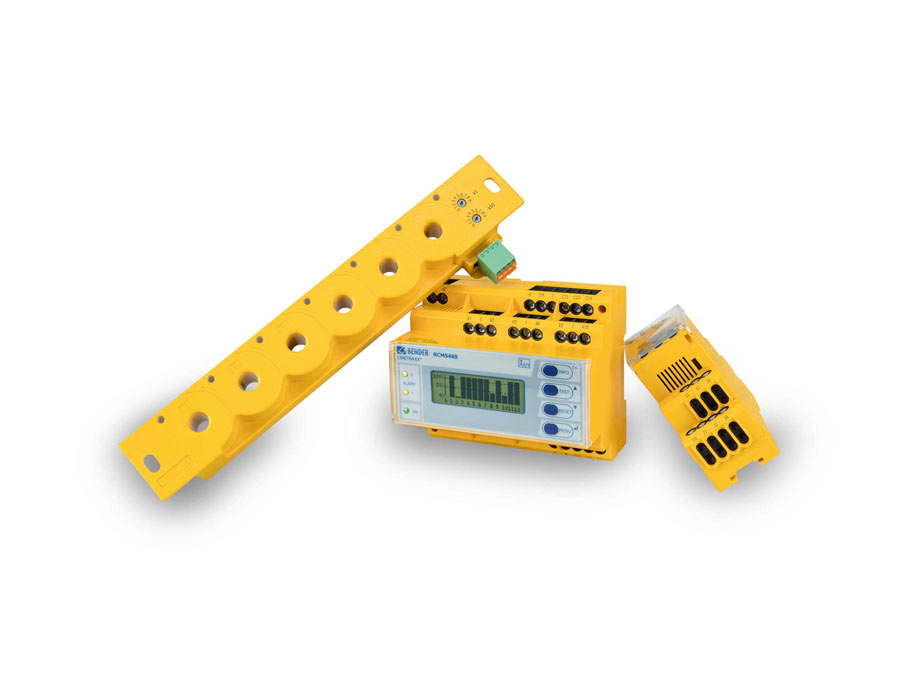
Active IMDs are like an online mega-ohmmeter. They connect between the system phase conductors and ground. A measuring signal is constantly applied to the phase conductors and will detect an insulation fault anywhere on the system from the secondary side of the supply transformer to the connected loads. If this signal finds a path to ground, it will return to the monitor. The IMD’s internal circuitry processes the return signal and activates a set of indicators when the configured alarm threshold is reached. IMDs measure in ohms (resistance), not amps (current). A ground fault will be indicated as “insulation breakdown”.
Yes, modern ground-fault protection devices with more sensitive ground-fault pickup levels can detect high-resistance faults before they reach a level that causes extensive damage. The correct CT selection can also allow detection of faults on non-linear loads that may be outside of the standard 60 Hz pickup that some ground-fault relays are tuned to.
While continuity of service is one major benefit of both resistance grounding and ungrounded systems, that ability should not be abused. Running with a ground fault on a system indefinitely is not a good idea. Many sites have a timer set on their alarms. If ground-fault alarms are not cleared within a certain number of hours, the system will start to trip. Having ground-fault tripping on non-critical circuits is recommended to lower the probability of having a phase-to-phase fault, another safety-by-design improvement that could be incorporated into systems.